Staff Stories: Marisa Ciotoli
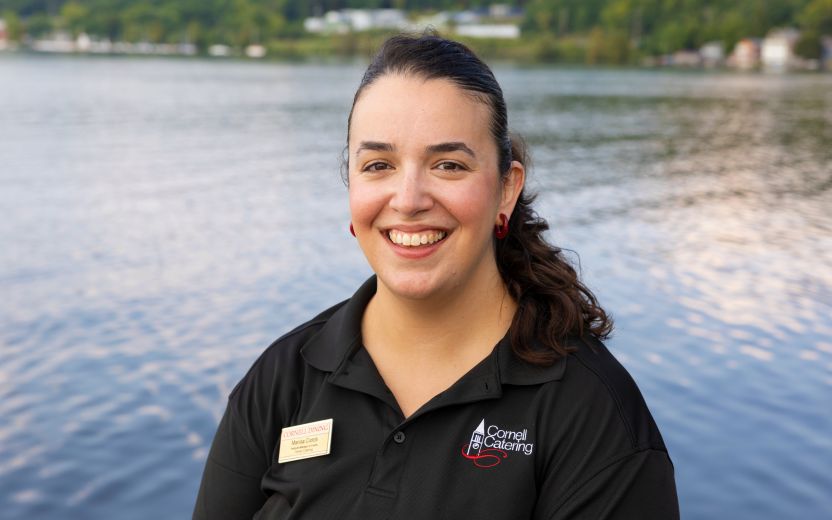
At Cornell Catering, the end of an event doesn’t necessarily mean the end of a meal.
As the evening stretches toward 8 p.m. and the last guests begin to depart from Ithaca’s Stewart Park, tables are cleared and the bustle of that night’s event starts to fade. Behind the scenes, however, catering staff are taking a closer look at what remains — and considering where it might go next.
Sorting through leftover food and checking temperatures, Marisa Ciotoli, banquet manager at Cornell Catering, and her team carefully package the food that can be salvaged, preparing it for volunteers from a local food organization who will arrive later that night to help deliver it to community organizations.
For the catering team, it’s one final task before the night is over. For Ciotoli, that extra step has become one of the most rewarding parts of the job — a way to make sure good food doesn’t go to waste.
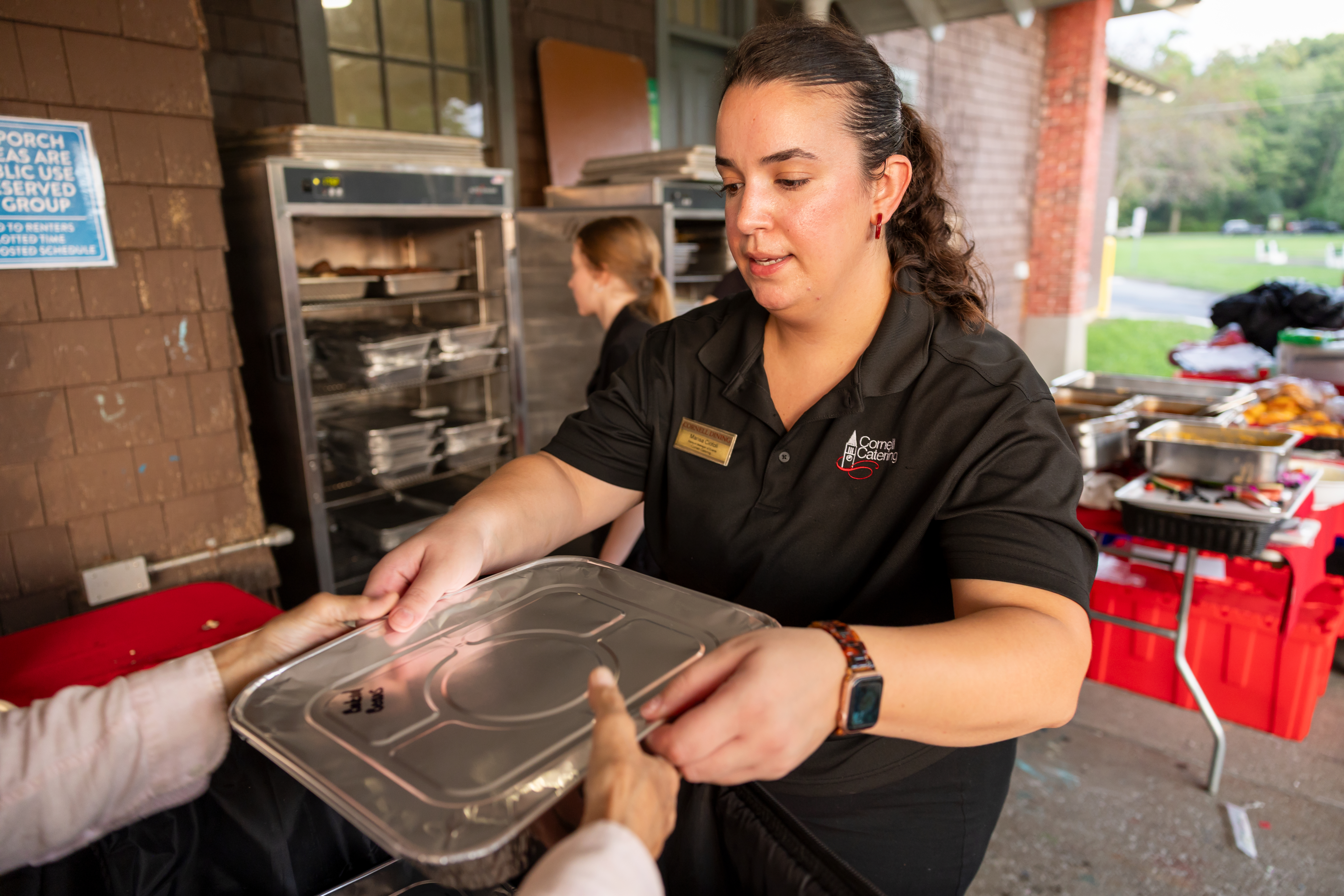
Behind the scenes of some of Cornell’s largest gatherings, from Trustee Council meetings to Commencement and Reunion, Ciotoli brings together the people, food, and countless details that turn a gathering into a memorable experience. But after seeing firsthand the amount of food that can sometimes remain afterward, often due to last-minute guest count decrease, she began working alongside senior leadership to reimagine what could happen to it next.
“That was always the part of catering that I struggled to get behind,” Ciotoli said. “But what we’ve been able to do at the end of our events in the past few years has just been so great.”
What began in 2022 as an effort to give surplus food a second life in the local community has since grown into a regular part of Cornell’s event operations, with dedicated teams and processes in place to recover as much safe, surplus food as possible.
At some of the university’s largest events, including Commencement and Reunion, food recovery requires a coordinated effort of its own. Staff assess what can be donated, use specialized equipment to keep food at safe temperatures, and work with volunteers to ensure it reaches the greater Ithaca community in time to make the strongest impact. During this year’s reunion weekend alone, more than 2,300 pounds of food from Cornell Catering was recovered and redistributed from their support of over 90 events, where 15,000 meals were served.
“We can actually make an impact in our immediate community with this food,” Ciotoli said. “We have the ability to give people something they may not otherwise have access to. We have all these resources, so let’s use them as best we can.”
Through Cornell’s partnership with Ithaca-based nonprofit Friendship Donations Network (FDN), that food can make its way beyond campus and into local organizations and programs serving the community. Founded in 1988 by Sara Pines, FDN has longstanding ties to Cornell and has worked with Cornell Orchards for decades to recover and redistribute apples. Pines, a longtime local advocate, later earned her doctorate in human resources from Cornell, further strengthening the connection between the organization and the university. Since 2024, this partnership has allowed Cornell Dining to divert thousands of pounds of food each year including food from Catering, retail operations, and dining rooms across campus.
Today, FDN coordinator Meaghan Sheehan Rosen has spent 15 years helping make that connection possible. For her, the power of food recovery lies in the real difference it makes in people's lives every day
“It’s such a win-win,” Sheehan Rosen said. “So many issues in the world feel very complex, and sometimes beyond our direct reach of how we can make an impact. But this partnership is something that directly impacts our community. On a daily basis, we see literal tons of food getting redirected that is perfectly good, nourishing, and delicious — food that otherwise would go to waste.”
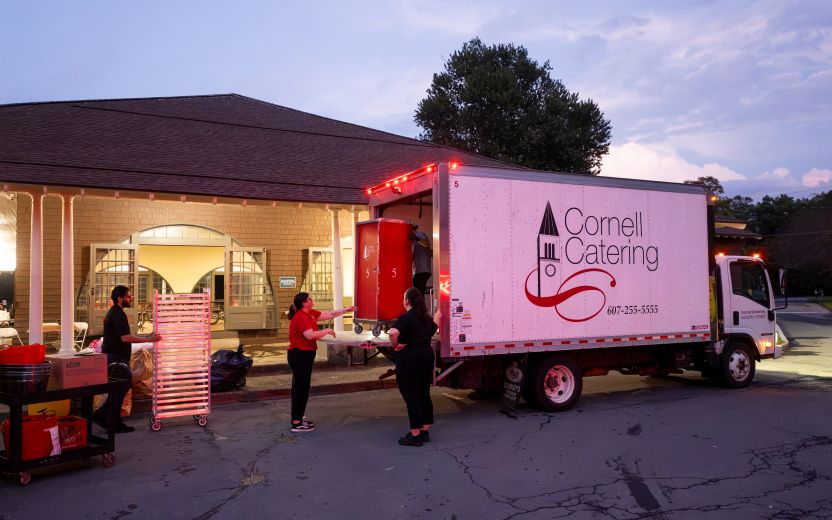
Once the food leaves a Cornell event, FDN coordinates a network of community partners throughout Ithaca, Tompkins County, and surrounding areas, using what Sheehan Rosen describes as “just-in-time food rescue.” Rather than sending donated food to a warehouse, FDN works to quickly connect each donation with food pantries, free meal programs, and other organizations that can use it within the same day or within a few hours.
Sheehan Rosen sees Cornell’s approach as a model other organizations can learn from.
“To be able to have Cornell be a successful example of how food recovery and donation is happening and how they’ve built it into the system is so important,” she said. “Marisa and her team have figured out how to make it part of the culture of what happens in Cornell Dining. It’s not an afterthought. Instead, it’s well prepared for and it’s built in. And I think that is a really valuable example to have for other businesses. Obviously, the food is a core part of it, but beyond that is this connection and the relationships with the people who are involved.”
At the end of the night, as Ciotoli and her team pack up and the last FDN volunteer pulls away from Stewart Park, the food begins the next part of its journey from Cornell’s kitchens and catering tables to a community meal, food pantry or, ultimately, someone else’s plate. For Ciotoli, food recovery has become a regular part of managing an event — one she hopes the team can continue to build on as they look for new ways to reduce food waste.
“We should be really proud of the efforts we’re making and the impact we’re having in our community,” Ciotoli said. “It’s so special to be able to get to do something like this. I’m eager to keep refining our process and looking for ways we can do things more efficiently or better, and I hope it inspires people to try something similar in whatever capacity they can.”